Attending the briefing by new Invasive Species Council CEO Jack Gough and his team in March was a highly informative and ultimately uplifting experience. Former CEO Andrew Cox can be assured that the organisation he guided to become Australia's leading voice in tackling invasive species, is powering on with renewed energy, passion and vision with comprehensive strategic plans of action.
We first heard about the devastating effect that fire ants are having in SE Queensland. Fire ant nests can be extensive with more than 3 million aggressive inhabitants. Outdoor school excursions have been curtailed due to bite risk factors and if an excursion permission is granted, teachers carry epi-pens in their first-aid kit. An ambulance must be called any time a child receives a bite. The devastation to wildlife is also significant, with echidnas, koalas being killed by swarming ants. Pets are also a casualty. Ant attacks on stock animals are a major cost to agriculture. Such is life in a fire ant region.
The good news is that fire ants can be eradicated with secure, sufficient, sustained funding. Northern NSW is now clear of fire ants and eradication could be achieved in Qld if immediate suppression funding to tackle high density ant sites is provided along with sustained funding to keep the eradication program on track. This is a major campaign for the Invasive Species Council.
Another good news story is the return of Kangaroo Island dunnart numbers as a result of the near eradication of feral cats and de-sexing of domestic cats on the Dudley Peninsula. The island is in reach of being a world leading, island-wide wildlife haven.
The Invasive Species Council is also campaigning to establish a nationally coordinated approach to invasive weed management. Introduced buffel and gamba grasses are creating mono-cultures and fuelling grass fires of much higher intensity that scar country, change landscapes, harm cultural sites and erode living indigenous knowledge that connects people to place.
Other challenges the Invasive Species Council are addressing are:
- preventing the next rabbit plague
- preventing wildlife diseases
- protecting native parrots
- driving co-ordinated long-term responses to invasive environmental threats in Qld
- wild deer control
- feral horse control in Kosciusko National Park
The Invasive Species Council’s vision is:
To be the catalyst which drives a lasting shift in government, communities and culture to save wildlife, stop extensions and protect Australia’s forest and rivers.
Big dreams, but this skilled, enthusiastic, politically savvy, focussed team looks to have the campaign strategies in place to advocate and achieve what I hope are the goals we all want.
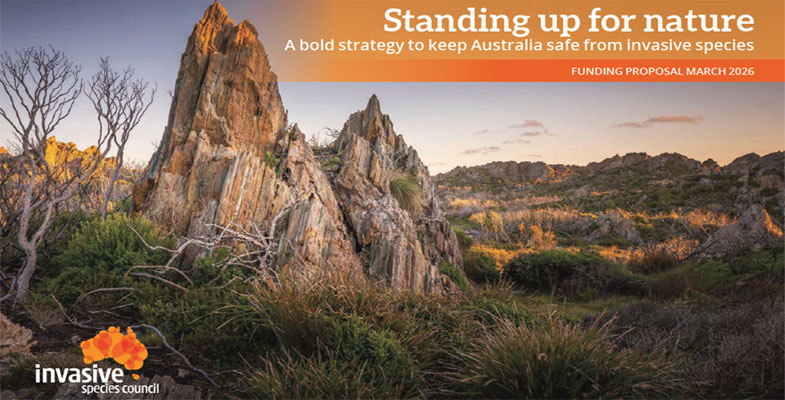
Check out their website and download a copy of their strategy, Standing up for nature: A bold strategy to keep Australia safe from invasive species.
By Deborah Gray