
STEP is a community-based environmental organisation with about 500 members from Ku-ring-gai, Hornsby and surrounding suburbs. Our primary aim is to work for the conservation of bushland in northern Sydney.
Core Original
Core Original
Grants
We fund research and environmental education using funds from sales of our publications and donations and bequests made to our Environmental Protection Fund. Contact us to discuss how we could help you.
Research Grant for the Conservation of Bushland
Applications for this annual grant of $2500 are welcomed from honours, masters and PhD students. The project must contribute to the knowledge that will assist the conservation of bushland in the Sydney region, e.g. flora and fauna studies, biodiversity, and management issues such as chemical pollution, weed invasion, erosion control and controlled burns. Click here for more information.
Young Scientist
STEP has aligned with Young Scientist and each year we award a prize of $250 for the best environmental project. The competition is organised by the Science Teachers' Association of New South Wales and is open to students from kindergarten to year 12. Click here for more information.
Other Funding Opportunities
We are prepared to consider funding projects up to $5000:
- to researchers (other than honours, masters and PhD students) who are studying any aspect of urban bushland in the Sydney region
- to schools for projects that promote awareness of the value of urban bushland, educate students or the community on how to minimise their impact on urban bushland, or restore a natural habitat
Click here for more information.
Research Grant for the Conservation of Bushland
Applications for the 2027 research grant of $2500 are welcomed from honours, masters and PhD students. To apply, complete this application form electronically, save it and email it to
2026 Georgie Brennan (School of Life and Environmental Sciences, Faculty of Science, University of Sydney, PhD) Understanding generalist pollination systems in Australian native flora: A case study with Sydney dwarf apple gum Angophora hispida
2024 Solomon Maerowitz-McMahan (Hawkesbury Institute for the Environment, Western Sydney University, PhD) Exploring Mycorrhizal Resilience: Insights from Post-hazard Reduction Burns in Ku-ring-gai Chase Forests
2023 Margarita Gil-Fernández (Macquarie University, PhD) Mycorrhizal Fungal Diversity Associated with Small Mammals in Response to Anthropogenic Disturbance
2022 Chantelle Doyle (UNSW, PhD) Ecology of the Critically Endangered Hibbertia spanantha (interview about Chantelle's work on how genetic rescue helps struggling native plant species on The Science Show)
2021 Erin Rogers (Hawkesbury Institute for the Environment, Western Sydney University, Master of Research) Phosphorus Liberation on Low Fertility Soils with Fire: How does it Affect the Re-growth Capacity of Native Plants?
2020 Ruby Paroissien (UNSW, honours) Impact of Changes in Fire Seasonality on the Reproductive Success of the Post-fire Flowering Species, Doryanthes excelsa
Postscript
Ruby's research was published in Environmental and Experimental Botany, vol 192, Dec 2021, 104634. You can also download a PDF of the paper, Effects of fire season on the reproductive success of the post-fire flowerer Doryanthes excelsa.
2019 Gabriella Hoban (UNSW, honours) Soil Characteristics as Indicators of Restoration Trajectories in Urban Woodlands
2018 Katie Rolls (Hawkesbury Institute for the Environment, Western Sydney University, PhD) Adaptive Capacity of Widespread and Threatened Acacia Species to Climate Change
Blue Gum High Forest
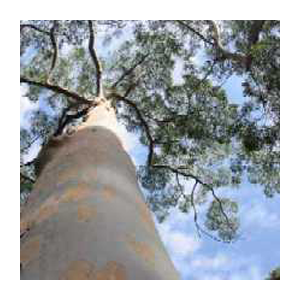 In 2007 the Blue Gum High Forest Group, a coalition of concerned groups, won their long-running campaign to protect the Blue Gum High Forest in St Ives. They:
- succeeded in having the Blue Gum High Forest ecological community listed as critically endangered under Commonwealth legislation
- campaigned successfully to have both 100 and 102 Rosedale Road purchased
- successfully nominated the Blue Gum High Forest for listing on the NSW Heritage Register
Blue Gum High Forest Discovery Kits are available to schools and other interested parties from Friends of Lane Cove National Park.
Short History
1938–1990
One owner, house since demolished and forest regenerating.
1990
Purchased for $1.8m; 9-lot subdivision refused by Ku-ring-gai Council.
1997
Gazettal of Blue Gum High Forest as an endangered ecological community.
2000
Lot 12 (102 Rosedale Road) and Lot 13 (100 Rosedale Road) sold for $2.2m.
2002
Land and Environment Court rejected a 4-lot subdivision on Lot 12 on the grounds of its inability to provide a sufficient asset protection zone (from bushfire hazard) and also its impact on the endangered Blue Gum High Forest community.
2004
Development application was submitted to Ku-ring-gai Council for a dwelling on 100 Rosedale Road.
2005
100–102 Rosedale Road was advertised for sale.
2005
Ku-ring-gai Council unanimously agreed to allocate part-funding for the purchase of 100–102 Rosedale Road.
2005
Commonwealth Minister for Environment and Heritage listed the Blue Gum High Forest and the Turpentine Ironbark Forest in the Sydney Basin as critically endangered.
2005
100 Rosedale Road was bought by the NSW Transport Infrastructure Development Corporation as an offset to compensate for 0.33 ha of Blue Gum High Forest destroyed as a result of upgrading Hornsby Railway Station and the property was transferred to the Department of Environment and Conservation.
2006
Blue Gum High Forest St Ives was selected as a Threatened Species Demonstration Site. This endangered ecological community was the first of 11 sites within the Sydney Metropolitan Catchment Management Area chosen to showcase best practice management to ensure the long-term viability of threatened species, populations and/or ecological communities.
2007
NSW Scientific Committee determined that the Blue Gum High Forest ecological community be listed as critically endangered, recognising the increased level of threat since it was listed as endangered in 1977 under the NSW Threatened Species Conservation Act.
2007
A development application was submitted for a large single dwelling on 102 Rosedale Road. The application was rejected by Ku-ring-gai Council.
2007
102 Rosedale Road was purchased by Ku-ring-gai Council, assisted by $350,000 from the National Reserve System and over $72,000 in public donations.
 Bushland Tracks and Trails
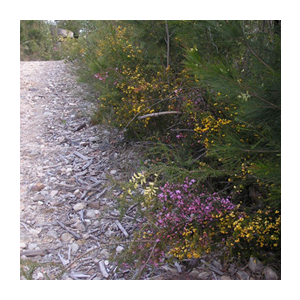
STEP is of the view that there are many positive aspects to a system of well-planned and well-maintained tracks and trails in urban bushland. When combined with good signage they open up the wonders of the bush and promote conservation education. Tracks and trails should be part of a system which protects the bushland, should be appropriately managed and should enhance the enjoyment of bushland by locals and visitors.
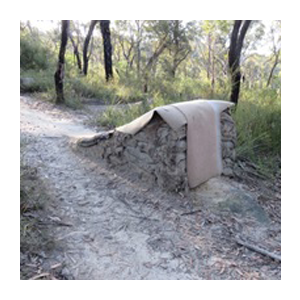
In August 2010, we published a position paper, encouraging the construction of tracks and trails for recreational and management purposes in areas that are degraded and severely degraded. We think that space should be provided for creative track building to encourage team skills, creativity and physical skills of young people. This needs to be associated with a remedial plan and no loss of neighbourhood amenity. Track and trail construction is not recommended in:
 areas with threatened populations, ecological communities or species
- areas which contain aboriginal, cultural or geological heritage
- riparian areas
- core bushland (bushland that has not been substantially modified)
Bushwalking is generally an acceptable activity on all tracks and trails, except those specifically designed for some other purpose such as bike riding. Cycling is an appropriate activity if confined to authorised sections of management trails and to separate authorised cycling tracks in degraded areas. Recreational motorised vehicles and horses are generally not acceptable on any track, with the exception of existing dedicated horse trails.